If you can't yet read Arabic script, finding the best Quran transliteration for beginners doesn't have to mean guessing between dozens of editions. This guide narrows Al-Hiqma's transliteration Qurans down to the five worth starting with, and answers a question a lot of beginners quietly worry about: is reading in transliteration even okay?
Is reading the Quran in transliteration okay for beginners?
Reading the Quran in transliteration means sounding out the Arabic text using Roman or Rumi letters instead of Arabic script. It's a bridge for anyone who hasn't yet learned to read Arabic.
For personal reading and reflection, this is widely accepted as a starting point. IslamWeb's Fatwa Department has held that transliteration cannot reliably represent all Arabic pronunciation and should not replace learning to recite in Arabic script¹.².. In a Southeast Asian context, the Federal Territories Mufti Office of Malaysia takes a more specific view. It permits Roman-letter transliteration as a temporary educational aid, ideally alongside the Arabic text, until the learner can read Arabic³.. Across these sources, the common point is that the Quran should be recited in Arabic, with learners making a serious effort to correct their pronunciation over time, rather than treating transliteration as a permanent substitute. For the detailed ruling on transliteration and Arabic pronunciation, readers should consult a qualified asatizah (a trained Islamic religious teacher).
That distinction matters for how you approach reading day to day. Guilt is often what stops new readers from opening a Quran at all, and knowing that transliteration is treated as an interim aid, not a failure, removes guilt that wasn't warranted. Whether you're comparing a Quran transliteration for beginners or looking for a beginner-friendly Quran in Singapore, the goal from day one is progress rather than a flawless first attempt. See our blog, Can You Read the Quran Without Knowing Arabic?, for a fuller look at this.
A reasonable way to start is one short surah a day in a Roman English transliteration Quran, read for personal reading rather than prayer, slowly enough to notice the sounds instead of rushing to finish. Al-Fatihah or Al-Ikhlas are good first choices, since you'll already recognise them from prayer. New Muslims trying this for the first time can build the reading habit this way while separately working with a teacher on reciting those same surahs correctly in Arabic for salah.
Once transliteration removes the fear of getting it wrong, most people find they actually keep opening the Quran, which makes it worth knowing which edition to start with.
What to look for in a beginner transliteration Quran
A good beginner transliteration Quran comes down to page layout, font readability, and whether it guides pronunciation rather than just spelling out sounds.
A cluttered page is often the real reason people give up, not the Arabic itself. When your eyes have to jump between three scripts with no clear structure, reading starts to feel like work. A clean three-column layout of Arabic, transliteration and translation removes that friction early on. Size matters too: a compact A5 or pocket edition travels well for reading on the MRT or during a lunch break, while a larger B5 or A4 edition suits slower reading sessions at a desk.
Before buying, flip to one page and read a single verse aloud. If you can follow it without losing your place, that edition probably fits you. Editions like the Abdullah Yusuf Ali Roman English Transliteration Quran are built with this kind of test in mind. If budget is a concern, a solid beginner edition doesn't need to be the most expensive one on the shelf; layout clarity matters more than premium binding at this stage.
Best English transliteration Qurans for beginners
A beginner English transliteration Quran pairs Arabic script with Roman-letter phonetics and an English translation, so you can read, sound out and follow the meaning in one sitting.
Which edition works best usually comes down to how well it matches your own reading habits, not which one is "best" in the abstract. Two editions are worth comparing first for English-speaking beginners in Singapore.
| Edition | Best for |
|---|---|
| Holy Quran by Abdullah Yusuf Ali | Roman transliteration with a widely recognised English translation |
| Noble Quran by Dr Muhsin Khan, Easy Reading for Beginners | Roman transliteration with a simplified layout and larger spacing |
Pick one edition and read from it for a month before switching. Consistency with one edition builds familiarity faster than comparing formats every week.
If you're choosing for a child rather than yourself, look for a dedicated children's edition instead of a standard adult layout. AlHiqma's gift collection for children includes options built for shorter attention spans.
Best Malay Rumi and Tajweed options
A Malay Rumi transliteration Quran pairs Arabic script with Rumi-script phonetics and Malay meaning. A Tajweed Quran adds colour-coded markings that guide pronunciation as you read.
For Malay-speaking beginners in Singapore, reading in a language you already think in removes a layer of friction. Understanding comes faster when you're not mentally translating twice, first from Arabic, then from English. This is part of why many Singapore families default to Malay Rumi transliteration for children and new reciters, and why pairing it with Tajweed colour-coding tends to build more accurate readers than transliteration alone. The two formats solve different problems, and many beginners end up using both.
A common approach is to start with a Malay Rumi edition, like the Al-Quran Malay Rumi Transliteration, for daily reading, then move to a Tajweed Quran with English Translation & Transliteration by Dar Al Maarifah once pronunciation needs sharpening. If you want to understand how translation and transliteration differ before choosing, read our blog on Quran Transliteration vs Translation.
How to move from transliteration toward reading Arabic
Pick one short, familiar surah you already know from prayer, Al-Ikhlas is a good choice, and read it in Arabic script first, using your transliteration Quran only when you get stuck. That's really the whole method: moving from transliteration toward Arabic means gradually recognising letters and short verses by sight, until transliteration becomes a backup rather than your only option.
Staying in transliteration indefinitely limits how deeply you can connect with the Quran, and as covered above, it isn't a long-term substitute for correct Arabic recitation in prayer. Recitation, memorisation and understanding all deepen once you're reading the actual Arabic script, even slowly. Most people who make this shift start by recognising a handful of familiar words, not by reading fluently overnight, so treating it as a gradual overlay rather than a hard switch tends to work better.
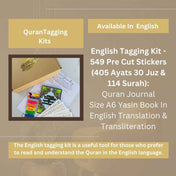
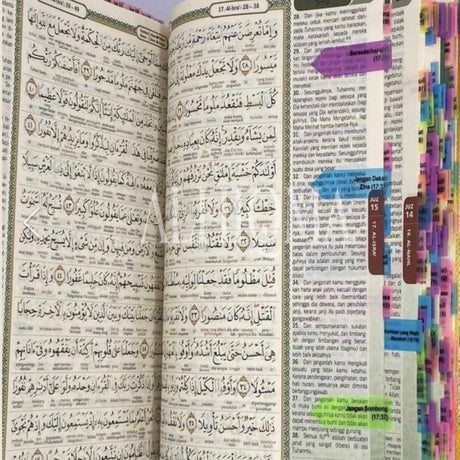
A Quran Tagging Kit, in English or Malay, can help you mark and revisit the verses you're building confidence with. For audio support alongside the text, the "My Qalam Smart Pen" lets you tap a verse and hear it recited, which can reinforce pronunciation faster than transliteration alone.
Once a few surahs start to feel familiar in Arabic, transliteration becomes what it always was: a temporary aid, not the destination. Our blog on Quran Transliteration: A Beginner's Guide builds on this further.
Frequently asked questions
Can I pray using a transliteration Quran, or only read it personally?
Transliteration works well as a learning and reflection tool for personal reading, but it isn't a substitute for reciting from memory in prayer. As the sources referenced above note¹.².³., the Quran should be recited in Arabic, with learners making a serious effort to correct their pronunciation over time. If you're not yet confident reciting from memory, holding a small transliteration copy for daily surahs like Al-Fatihah is a reasonable stepping stone while you learn; check with a local imam or asatizah for guidance specific to your situation.
Is Roman or Rumi transliteration easier for a first-time reader?
It usually comes down to which script feels familiar rather than one being inherently easier. Malay speakers in Singapore often find Rumi transliteration more intuitive since it mirrors spelling patterns they already read daily, while English-speaking beginners typically default to Roman transliteration. If you're unsure, flip through a sample page of both before buying, or see our comparison of Quran Transliteration vs Translation.
I read Arabic slowly. Do I still need a Tajweed Quran?
Yes, if anything more so. Reading slowly gives you time to notice each marked rule as you go, which is exactly what Tajweed colour-coding is for. A Tajweed Quran with English Translation & Transliteration by Dar Al Maarifah pairs well with a slower, deliberate reading style.
Does reading in transliteration carry the same reward as reading in Arabic?
This is a genuine concern for many beginners, and it's best answered by a knowledgeable teacher or imam rather than a general guide, since views on this vary. What's widely agreed on is that sincere effort to connect with the Quran matters at whatever stage you're at, and transliteration is generally treated as an acceptable, temporary aid for personal reading rather than a substitute for Arabic recitation³.
How do I know when I'm ready to stop using transliteration?
There's no fixed timeline. A reasonable sign is recognising a handful of short surahs by their Arabic shapes rather than needing to sound them out. Pairing daily transliteration reading with a Quran Tagging Kit can help you track which verses you're starting to recognise on sight.
1. Ruling on reciting Quran in transliteration, IslamWeb Fatwa Department, November 12, 2015.
2. Transliteration of the Quran and Reading the Quran in a Language Other Than Arabic, IslamWeb Fatwa Department.
3. Irsyad al-Fatwa Series 172: The Ruling of Using Romanised Letters to Write the Quran, Federal Territories Mufti Office of Malaysia.