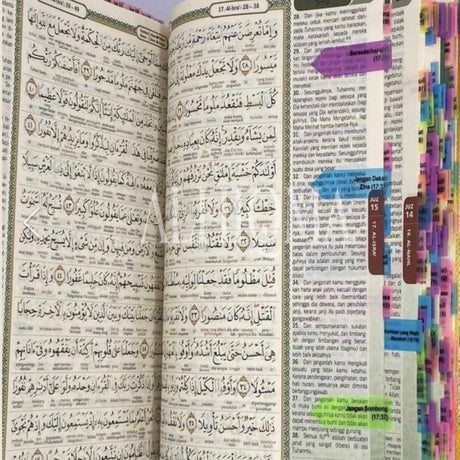
Different Qurans use different Quran transliteration symbols for the same Arabic sound. Different publishers are simply solving the same problem in different ways. Once you know how to read your edition's own key, none of it is guesswork.
Why Every Quran's Symbol Key Looks a Little Different
Quran transliteration symbols are the marks, macrons, and letter combinations a publisher adds to Roman or Rumi text so readers can approximate Arabic sounds their own alphabet was never built to spell.
Every translator preparing a transliterated Quran runs into the same wall: Arabic carries sounds that simply don't exist in English or Malay. So someone has to make a judgment call about how to write them down. That's a deliberate trade-off, made once and then applied consistently through the whole text, not carelessness. Abdullah Yusuf Ali explained his choices in his own translator's notes. He used a single macron for long vowels and one inverted apostrophe for 'ain. He skipped a distinct sign for hamzah entirely, judging that extra marks would confuse English readers more than help them.
So before you try to decode any symbol on the page, flip to the opening pages of whichever Quran you're actually holding and find its own key first. A copy from the Roman English Transliteration by Abdullah Yusuf Ali collection spells out its exact system right there in the front matter, so you're reading it the way it was designed rather than guessing from habit. (You can see the same logic in Yusuf Ali's own published transliteration key, where he explains each choice line by line.)
One quick note before you go further: these are transliteration symbols, not the small Arabic-script marks like م, لا, or قلى you may have seen in a Mushaf. Those are waqf (pause) signs. They belong to a different system for knowing where to stop while reciting. This guide is only about the Roman and Rumi letters.
Once you've matched the mark to its meaning in your own copy, every symbol on the page stops being a mystery. It starts doing its actual job: telling you how to say the word. Start with the easiest ones to spot: the marks sitting right above the vowels.
Vowel Transliteration Symbols — Macrons and Long Sounds
A macron is the small line placed above a vowel — as in ā, ī, or ū — telling you to hold that sound longer than a plain a, i, or u.
This distinction matters more than it looks. In Arabic, vowel length can change which word you're saying, not just how it sounds. Your brain already does this instinctively in everyday speech — think of the difference between "sheep" and "ship." The macron flags a difference you're already wired to hear. Skip it, and a stretched-out word can quietly turn into a shorter, different one.
| Symbol | Meaning | Example |
|---|---|---|
| a, i, u | Short vowel | rabbi, bihi, qul |
| ā, ī, ū | Long vowel — hold the sound | Rahmān, Rahīm, nūr |
Try it on a line you already know: in "Ar-Rahmānir-Rahīm," hold the ā in Rahmān and the ī in Rahīm a beat longer than the short vowels around them — the same way you'd naturally draw out a note in recitation. Yusuf Ali's own Quran Transliteration: A Beginner's Guide walks through more of these familiar phrases.
Get the macron right, and half of correct Quran pronunciation is already in your hands.
Consonant Transliteration Symbols — Apostrophes, Digraphs and Dots
Beyond the vowels, transliteration uses apostrophes, letter pairs like th and kh, and — in some editions — small dots beneath a letter, to represent Arabic consonants that Roman script has no single letter for.
The Apostrophe: 'Ayn and Hamzah
The apostrophe is the mark that trips up most beginners, because it looks like punctuation rather than a sound. But in a word like 'Alīm, that opening mark represents 'ayn — a distinct consonant produced from deep in the throat, not a pause or a typo. Yusuf Ali addressed this directly in his own notes: he chose one inverted apostrophe for 'ayn and deliberately left hamzah unmarked, judging that extra symbols would confuse readers more than guide them.
Digraphs: Letter Pairs Standing for One Sound
Pairs like th, kh, sh, and gh each represent a single Arabic letter with no English equivalent. For example, kh in khalaqa is one throaty sound, not "k" followed by "h."
Dots Under Letters: Not in Every Edition
Some transliteration systems mark "heavy" or emphatic letters with a small dot beneath them (ḥ, ṣ, ḍ, ṭ, ẓ). You won't find these in the Yusuf Ali edition at all — his system uses plain letters instead, and expects you to work it out from context. Reading that edition? Don't go hunting for a dot that isn't there. Reading a different edition and you spot one? Check its front-matter key for what it means.
The method is simple: whenever you hit an apostrophe or an unfamiliar pair like kh or gh, slow down and mouth the shape deliberately rather than skating past it. Say 'Alīm slowly, feeling the catch at the start, before returning to normal pace.
Master these marks and you can sound out almost any word in the Roman English Transliteration by Abdullah Yusuf Ali edition with real confidence, even before you know a single Arabic letter.
That confidence matters even more once you compare this system side by side with a Malay Rumi edition, where some of these same sounds are written a different way entirely.
Roman vs Rumi Transliteration Symbols: Reading Your Edition's Own Key
Roman transliteration and Rumi transliteration are two different spelling systems built for the same job: guiding a reader through Arabic sounds. One is shaped around English conventions, the other around Malay ones.
That's why a word can look different across two Qurans on the same shelf, and neither spelling is "wrong." A Malay-speaking reader often finds Rumi text faster to sound out. The letter patterns already match sounds they've read their whole life in Bahasa Malaysia. English readers lean on macrons and digraphs for the same reason: familiarity. Your brain isn't struggling with the Arabic sound itself here — it's working through an unfamiliar spelling convention. That gap closes fast once you know what to expect.
So treat the switch the same way you did with the Roman system: open the front pages of your specific copy and locate its printed key before assuming anything. Someone comfortable with the Malay Rumi Transliteration collection often reads it more naturally than a Roman English edition, because the spelling already feels like home.
A note on colour: if your copy also uses Tajweed colour-coding alongside its transliteration, treat the two as complementary, not competing. The transliteration symbol tells you which sound to make, and the colour tells you how to shape it. They're answering different questions on the same page.
Once you can move between both systems, no transliterated Quran on the shelf is ever off-limits to you — including the small marks that show you where to pause, double up, or hold back on an ending.
Repeated Letters, Endings, and Reading With Confidence
A doubled consonant in transliteration (like the bb in rabb) signals shaddah, meaning you hold that sound for two beats instead of one. Certain word endings written in the text (like -an or -in) often drop away when you pause at the end of a verse.
Both of these can feel like tiny, easy-to-miss details. But they're the kind of thing that makes a reciter sound hesitant even when every letter before it was pronounced perfectly. Doubling rabb into a firm, held sound — rather than a quick tap — changes how confident the word feels leaving your mouth. Confidence, more than perfection, is what keeps beginners reading instead of putting the book down. The ending rule works the same way. Knowing when to let a sound fall away at a stop means you're reading with the rhythm of recitation, not just decoding letters one by one.
| Pattern | Meaning | Example |
|---|---|---|
| Doubled letter (e.g. bb, nn) | Shaddah — hold for two beats | rabb, iyyāka |
| Ending like -an, -in, -un | Often dropped when pausing at a stop | word softens at verse-end |
Practice this on one short surah at a time: say the doubled letters with real weight, and hold back the extra ending sound whenever you're pausing rather than continuing into the next word.
Put every symbol from this guide together, and you can open almost any transliterated Quran on the shelf and read it the way it was meant to be read. Pick up the full walkthrough in Quran Transliteration: A Beginner's Guide, compare it against meaning-based reading in Quran Transliteration vs Translation, or start from Can You Read the Quran Without Knowing Arabic? if you're still deciding where to begin.
Free Tools to Check Your Pronunciation
Reading the symbols is step one. Hearing whether you got them right is step two — and you don't need to buy anything to do that.
| App | Best for |
|---|---|
| IQRA | An all-in-one starting point |
| TajweedMate | Hearing your own mistakes |
| Muallim | Learning tajweed rules in order |
| QuranLearnAI | Free AI coaching, no account |
| Noor Phonetic Quran | Beginners who want phonetics over Arabic script |
Here's how to actually use them, in order:
- Listen to each word first with IQRA, following along on the Arabic text as you go.
- Record yourself with TajweedMate or QuranLearnAI. Hearing your own recitation played back is the fastest way to catch a mistake you can't hear in the moment.
- Practise short surahs first — Al-Fātiḥah, Al-Ikhlās, and Al-Falaq are short enough to repeat slowly without losing patience.
- Flag the hard sounds for a teacher. Ḥāʾ, 'ayn, ṣād, ḍād, ṭāʾ, and qāf are the six letters most non-Arabic speakers get wrong, and an app can only get you so close on these.
One honest caveat: AI feedback is good for repetition, but it isn't a religious authority, and it can miss things a human ear catches — elongation, stopping rules, subtle mispronunciation. Think of these apps as daily practice, not a final answer. If you're in Singapore, the safest combination is one of these apps for daily practice, plus the occasional session with an MUIS-recognised asatizah to check you're getting it right.
Frequently Asked Questions
Why do two different Qurans spell the same word differently?
Because each publisher made its own judgment call about how to represent Arabic sounds that English or Malay never had to spell before. Yusuf Ali chose macrons and a single apostrophe for 'ayn; other editions use dots or different digraphs for the same sound. Both are different keys to the same lock, which is why checking your own copy's front pages beats memorizing one universal system.
Do I need to know Arabic before I can use transliteration?
No. Transliteration exists so you can start reading before you learn the Arabic script — the same way training wheels let you ride before you've mastered balance alone. If you'd rather understand the meaning first, see how transliteration compares to translation here. Otherwise, open a short surah in the Roman English Transliteration by Abdullah Yusuf Ali collection and sound out one line today.
Is transliteration accurate enough to use in prayer?
It's a useful bridge, but it approximates rather than fully captures Arabic pronunciation, makhārij, and tajweed rules. Pairing it with audio recitation, or reciting alongside someone who already knows the correct pronunciation, closes the gap transliteration alone can't. Treat it as your starting point, not your final destination. If you're ever unsure whether your recitation is correct enough for a specific act of worship, ask a knowledgeable teacher rather than guessing.
Can I skip the macrons and dots if I already recognize the word?
It's tempting, but skipping them is often where a stretched vowel quietly turns into a shorter, different-sounding word — the same instinct that tells you "sheep" and "ship" aren't interchangeable applies here. Slow down on marked letters until they become automatic. Speed follows after that.
My Quran doesn't have any of these symbols — why not?
Some editions are Arabic-script only, or translation-only, and were never designed to include a transliteration layer at all. If you want one that does, look for the format labelled "transliteration" specifically, such as the Roman English or Malay Rumi collections above.
Is there an easy way to check I'm reading the symbols correctly?
Yes — record yourself and compare it to a correct recitation. See the free tools above for apps built for this, several with no sign-up required.
Answer these questions for yourself and you're no longer decoding a transliterated Quran. You're reading one, which is the whole point of learning the symbols in the first place.