Transliteration tells you which letters to say. It can’t tell you how they sound. A reciter can. Put the two together and the page finally starts to make sound in your head.
That’s the idea behind Quran transliteration with audio. You listen and read Quran transliteration at the same time, one verse at a time, until it feels steady.
You don’t need any Arabic to start. You need a copy you can read and one reciter you trust.
Why transliteration works better with audio
Quran transliteration shows Arabic sounds in Roman or Rumi letters. Audio lets you hear the real sound, so your eyes and ears learn each word together.
The page can only hint at a sound. Many transliterations write ع and أ as the same plain “a”. That’s how ‘alim (the All-Knowing) can slip into alim (painful), one of the common mistakes beginners make with transliteration.
A reciter fixes that in seconds. For most learners, a sound they have heard is far easier to copy than one they had to guess from print.
Listening also counts in its own right. Shaykh Faraz Rabbani explains that scholars see listening to the Quran as rewarding as reciting it, pointing to Quran 7:204. He also encourages following along in a copy, which phones make easy by highlighting each verse as it plays.
Try it now. Play the first verse of Surah Al-Asr, wal-‘asr, and run your finger under the word as the reciter says it. Listen for the small catch in the throat on that ‘a.
If you’re brand new, start with our guide for readers who don’t know Arabic yet. Otherwise, move on to your setup.
What you need for Quran transliteration with audio
You need a copy you can read, one reciter, and a few playback settings. Choose them once, before you start, so each session can go straight to the Quran.
- Your copy. Pick the script you already read. English readers can start with the Abdullah Yusuf Ali Quran with Roman transliteration. If you grew up reading Rumi, a Malay Quran with Rumi transliteration will feel more natural.
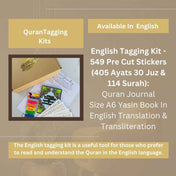
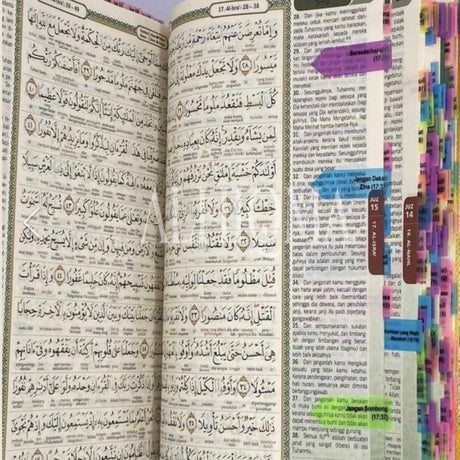
Unsure which verses to begin with? A tagged Quran gives you a starting point. Our ready-tagged Qurans come with 549 colour-coded tags that mark key teachings, promises and everyday issues. Open to a tagged verse, press play and begin. Already have a Quran you love? Add a Quran tagging kit instead.
- Your reciter. Choose one slow, clear voice and stay with him for at least a month. Beginners often use one of these three:
| Reciter | Why beginners like him | Where to listen |
|---|---|---|
| Sheikh Mahmoud Khalil Al-Husary | Slow, measured murattal; every letter is clear | Al-Husary on Quran.com |
| Sheikh Muhammad Siddiq Al-Minshawi | Calm and steady; a good second choice | Al-Minshawi on Quran.com |
| Sheikh Abu Bakr Al-Shatri | Listeners say his slow pace makes it easy to follow along with transliteration | Al-Shatri on Quran.com |
Once you’re comfortable, try the teaching-style “Muallim” recording of Al-Husary on Quran.com. Our guide to improving your Quran pronunciation explains why one steady voice helps your ear settle faster.
- Your settings. Set these once in the Quran.com audio player menu:
- Speed: slow it down.
- Repeat: one verse at a time.
- Auto-scroll and word tooltip: on, so you can tap any word and hear it alone.
- Download: save the surah’s audio to practise on the MRT or anywhere without data.
The listen, follow, repeat method to follow along Quran recitation
This is a four-step way to learn one verse: hear it, trace it, say it back, then read it alone.
It mirrors how we all learned to speak: hearing first, then copying. Each step builds on the last, so you never have to do everything at once. Every verse you finish makes the next one easier.
The order isn’t new. An answer on AboutIslam advises learners to listen to the reciter, read after him, then try alone, with a translation nearby for the meaning.
Start with Surah Al-Asr, which has just three verses. Here’s how it looks with verse 2, innal-insana lafi khusr:
- Listen. Close your eyes. Play the verse twice. Notice where the voice stretches and where it stops.
- Follow. Play it again with your finger under the transliteration, so your eyes land on khusr as you hear it.
- Repeat. Pause and say the verse aloud, at the reciter’s speed, not yours. If a word catches, tap it to hear it alone.
- Read alone. Say it without audio. Then play it once more and listen for one difference, maybe a vowel you cut short or a kh you softened.
Move to the next verse only when step 4 feels steady.
Then look at the meaning. In plain words, the surah swears by time. It says people are in loss, except those who believe and do good and urge each other to truth and patience. Here’s how to keep the translation open alongside your transliteration.
Spelling differs between editions. You may see khusr as khusrin when it runs into the next verse, and sabr with a dot under the s. That dot marks the heavy ص. Our guide to transliteration symbols explains the marks in your copy.
Once Al-Asr flows, carry the same steps through the other short surahs. Our beginner’s guide to Juz Amma suggests which surah to try next.
Mark what the audio shows that the page hides
Whenever the reciter does something your transliteration doesn’t show, make a tiny pencil mark.
You’ve probably noticed these moments already. The reciter holds a vowel longer, hums through his nose, or pauses where the line keeps going. A small mark keeps that sound in front of you every time you open the page. As the marks build up, you can see how much more your ear catches.
Three marks in light pencil are enough:
- Underline a vowel he stretches.
- Circle letters he joins or hums.
- Draw a short slash where he stops.
On Surah Al-Asr, you might underline the first a in amanu and circle the doubled n in innal, where his voice hums for two counts. The slash goes at the end of bis-sabr, where the surah comes to rest.
[IMAGE: Close-up of Surah Al-Asr transliteration with pencil underline, circle and slash marks | ALT: Marking a Quran with transliteration while listening to audio recitation]
Rather not write in your Quran? Keep a small notebook beside it for the surah, verse number and mark.
When the same patterns keep showing up, a colour-coded copy like the Dar Al Maarifah Tajweed Quran prints many of these rules for you. To decide if you’re ready for one, see whether Tajweed colours or transliteration suit you better.
4 mistakes that slow you down with audio
Audio makes learning easier, but a few habits can hold you back:
- Switching reciters. Each voice has its own pace and style, so changing every week resets your ear. Stick with one.
- Only playing on autoplay. Listening is good, but learning needs you to pause and repeat. Use repeat, not autoplay.
- Reading faster than the reciter. If you race ahead, you’ll copy your own guesses. Match his pace, even if it feels slow.
- Skipping step 4. Reading alone shows you what you know.
A 10-minute daily routine and when to look at the Arabic
Pick a short session at the same time each day.
Ten minutes may sound small. But the Prophet ﷺ said the deeds most beloved to Allah are the regular ones, even if they are little Sahih al-Bukhari 6464. Tie your session to something you already do, like the quiet minutes after Fajr or the last thing before bed. That way, you never have to decide when to start.
Split your ten minutes like this:
| Time | What to do |
|---|---|
| 2 minutes | Listen to one verse |
| 4 minutes | Follow and repeat |
| 2 minutes | Read it alone |
| 2 minutes | Review your pencil marks |
If you have more time, stretch to 15 or 20 minutes. A short daily session still beats an hour once a week.
Once you can say a verse without pausing the audio, play it again with your finger on the Arabic line instead. A word-by-word Arabic and English Quran makes that switch gentler, because each Arabic word sits above its meaning.
Between sessions, let the sound play in the background. A Quran Magnet Speaker for your fridge plays a preloaded surah such as Yasin or Ar-Rahman with one touch, no app needed. Every week or two, ask a qualified teacher to listen to you. A recording can’t hear your mistakes, but a teacher can.
The Majlis Ugama Islam Singapura (MUIS) Islamic calendar lists 1 Ramadan 1448H as Monday, 8 February 2027. Start now, and you could enter Ramadan reciting the short surahs from sound you trust.
You don’t need to master Arabic before the Quran starts to sound right. A transliterated copy, one slow reciter and ten minutes a day are enough to begin.
Tomorrow, pick one verse from Surah Al-Asr or from any tag in your Quran. Listen twice, follow with your finger, say it back, then try it alone. Make one pencil mark for anything that surprised you, and that’s a full session.
Over the coming weeks, carry the same steps through the short surahs. Many beginners find their confidence working through Juz Amma transliteration with audio, since the surahs are short and you’ll hear them often in salah.
Want a printed copy to use with the audio? Our beginner-friendly Quran with Arabic, transliteration and English is a good place to start. To track your progress, download our free Quran Pronunciation Checklist and keep it beside your prayer mat.
Every verse you try counts, including the ones you stumble over. So tomorrow, press play.
Frequently Asked Questions
Can I just listen to the Quran instead of reading?
You can. Listening is a real act of worship, and many people learn Quran by listening long before they read. On tired days, just listen. On better days, follow along in your copy and you’ll start learning the words too.
Is it okay to read along while a reciter is playing?
Yes. Listening first, reading after the reciter, then trying alone is a long-recommended way to learn. It matches the listen, follow, repeat method.
What playback speed should I use?
Use the slowest speed that still sounds natural. Speed up a little once a verse feels easy.
What if the reciter is still too fast, even slowed down?
Try shorter surahs first, since they have shorter verses. If it’s still too fast, switch once to a slower voice such as Al-Husary and keep him as your reciter.
How many times should I repeat a verse?
Repeat until you can say it alone without stopping, then move on. Some verses take three tries, others take ten.
The spelling in my Quran doesn’t match the app. Which is right?
Usually both, because every edition uses its own system. Trust the reciter’s sound over either spelling, and check the spelling note in the method section above.
Can I practise without internet?
On Quran.com, you can download a surah’s audio from the audio player menu and play it offline on your commute.
I grew up reading Rumi. Does this still work?
It works the same way; only the letters change. If you’re unsure which script suits you, see where Roman and Rumi transliteration differ.
I’m a new Muslim. Is this a good place to start?
It is. Start with Al-Fatihah and the short surahs you’ll use in salah, one verse at a time. Don’t worry about being perfect.
Can my elderly parents use this method?
A large-print transliteration Quran and a simple speaker make it easier on the eyes and hands. Keep sessions short and let them set the pace.
Can my children use Quran transliteration with audio?
Young children do best learning the Arabic letters first. The Iqra phonic books in English and Malay teach one sound at a time. Short audio sessions together on Al-Asr or Al-Ikhlas make a gentle add-on.
Does audio replace a Quran teacher?
No. A recording can’t hear you, so some mistakes stay hidden. Practise with audio during the week and let a teacher check you every week or two.
When can I stop using transliteration?
There’s no fixed date. When you can say a verse without pausing the audio, try it with your eyes on the Arabic. Do that verse by verse, and the switch happens on its own.