Quran transliteration turns Arabic sounds into Roman letters so you can pronounce the words, while Quran translation turns those same words into English so you can understand what they mean.
Beginners often lump the two together because both sit on the page next to the Arabic script, doing the job Arabic alone can't do for a new reader. But mixing them up creates real friction: pick transliteration when you actually needed translation, and you'll be reciting words correctly while missing the message behind them. This is the exact confusion between Quran translation vs transliteration that trips up most people in their first few weeks of learning.
Here's the simple way to keep it straight: transliteration answers "how do I say this," translation answers "what does this mean." Take the opening line of the Quran — transliterated, it reads "Bismillahir Rahmanir Raheem"; translated, it reads "In the name of Allah, the Most Gracious, the Most Merciful." Same verse, two completely different jobs.
Once that difference clicks, choosing the right edition for where you actually are in your reading journey gets a lot easier.
Quran Transliteration vs Translation: Side-by-Side Comparison
Laid side by side, the difference between Quran translation and transliteration comes down to one question: are you reading for sound or for sense?
Most Quran editions with English support actually offer three layers — Arabic script, transliteration, and translation — and beginners tend to assume all three teach you the same thing. They don't, and treating them as interchangeable is what stalls progress: someone reciting confidently from transliteration can still have no idea what they just read, while someone who only reads the English translation can't yet follow along during prayer. Understanding Quran transliteration meaning versus translation meaning early saves you from that gap.
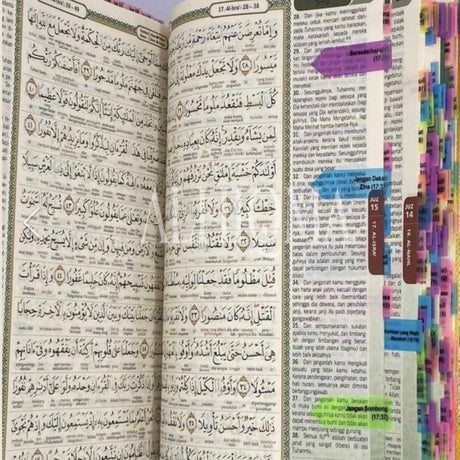
A quick way to test which one you're holding: if the text uses English letters to spell out Arabic sounds ("Alhamdulillahi Rabbil 'Alameen"), that's transliteration; if it renders the verse's meaning in plain English ("All praise is due to Allah, Lord of the worlds"), that's translation. Editions like the [LINK TEXT: Al-Quran In Three Languages With Latin Transliteration print both side by side precisely so you can cross-check one against the other.
Once you can spot English translation vs transliteration Quran text at a glance, you're ready to work out which named edition actually suits where you are right now.
Which Edition to Choose — Yusuf Ali, Muhsin Khan, or Dar Al Maarifah
Three names come up constantly once you start comparing Quran translation vs transliteration editions in English: Abdullah Yusuf Ali, Dr Muhammad Muhsin Khan, and Dar Al Maarifah.
Yusuf Ali's translation has historically been the most widely read English rendering of the Quran, prized for its flowing language and extensive footnotes that unpack context verse by verse. Muhsin Khan's Noble Quran, translated with Dr Muhammad Al-Hilali, leans more transliteration-forward and has grown to rival Yusuf Ali in popularity, especially among readers who want commentary woven directly into the text rather than tucked into footnotes. Dar Al Maarifah takes a different approach altogether, building its edition around colour-coded Tajweed rules alongside transliteration and translation, which suits readers who want pronunciation accuracy built into the page rather than learnt separately. Neither is "more correct" than the other two — the right pick depends on whether you're reading to absorb meaning, build vocabulary, or nail pronunciation, which taps into a simple truth: tools that match how you actually learn are the ones you stick with.
If meaning and flow matter most to you, start with an English transliteration and translation by Abdullah Yusuf Ali. If you want transliteration alongside detailed notes, try the Noble Quran by Dr Muhsin Khan. If pronunciation is your priority, the Tajweed edition by Dar Al Maarifah builds Tajweed rules directly into the colour-coded text.
Either way, you walk away with an edition built for how you actually read, not a generic one-size-fits-all copy.
That still leaves the pronunciation question open — which is exactly where beginners tend to trip up next.
Common Mistakes Beginners Make Choosing Between Them
Even after choosing an edition, most beginners stumble into the same handful of avoidable mistakes with Quran transliteration vs translation.
The biggest one is treating transliteration as a permanent solution instead of a bridge — staying with Roman letters for years instead of gradually moving toward the Arabic script itself. A close second is jumping between publishers with different spelling systems, so the same word shows up as "Aa," "A'," or "Ā" depending on which book is open that week, which resets the mental pattern you'd built. This kind of inconsistency is exactly what stalls confidence, because the brain needs a stable pattern to lock in pronunciation before it can build on it.
The fix is simple: pick one edition, stay with it for at least a few months, and only add a second source (like audio recitation) once the first one feels familiar. For example, someone using Muhsin Khan's transliteration daily will progress faster than someone switching between three different apps each week.
Stick with one consistent system, and reading Quran transliteration stops feeling like guesswork.
How to Decide What You Need First
So which one should you actually start with — translation, transliteration, or both at once?
The honest answer depends on where you're starting from, and working that out matters more than which named edition you buy, because the right starting point removes decision fatigue and keeps you moving instead of stuck comparing books. If you can't yet read Arabic script, start with transliteration paired with audio recitation, so your ear and your eyes learn together. If you can already recite but don't know what you're saying, start with translation — the meaning is what's missing, not the sound.
Here's the simple test: cover the Arabic and transliteration lines and try reading just the English translation aloud in conversation — if it feels natural, you're ready for a translation-led edition; if you'd rather sound out the Arabic first, start with transliteration. A new Muslim reciting Surah Al-Fatiha for the first time, for instance, usually needs transliteration before translation, while someone who grew up reciting but never studied Arabic usually needs the reverse.
Answering this one question for yourself is what turns "which Quran should I buy" from overwhelming into obvious.
For the complete beginner path, see Quran Transliteration: A Beginner's Guide and Juz Amma: A Comprehensive Guide for Beginners and Beyond.
Frequently Asked Questions
Can Quran transliteration replace learning Arabic?
No. Transliteration is a bridge that helps you pronounce Arabic sounds using Roman letters while you learn to read the Arabic script itself. It's a starting point, not a permanent substitute — most readers gradually move from transliteration towards reading the Quran in Arabic.
Is the Yusuf Ali or Muhsin Khan edition easier for beginners?
It depends on what you need. Abdullah Yusuf Ali's translation is prized for flowing English and detailed footnotes on meaning, while Dr Muhsin Khan's Noble Quran leans more transliteration-forward with commentary built into the text. Choose Yusuf Ali if you're focused on understanding meaning, or Muhsin Khan if you want transliteration alongside notes.
Do I need both translation and transliteration in one Quran?
Not necessarily, but many beginners find it helpful. Editions that combine Arabic script, transliteration, and translation side by side let you cross-check pronunciation against meaning, which is useful early on before settling into one primary reading method.