Many Muslims in Singapore and Malaysia grew up hearing the Quran recited without ever learning to read Arabic themselves. That gap often turns into quiet guilt, especially once you're the one responsible for teaching your own children. The good news: reading, understanding, and eventually learning Arabic are three separate stages, and you can start the first one today, with the edition already sitting on your shelf.
Reading Arabic script and speaking Arabic are two different skills
Reading Arabic script means recognising the letters on the page. Speaking Arabic means understanding what those words mean in everyday conversation. Two separate skills. They grow at different speeds, and nobody expects you to have both on day one.
Millions of Muslims recite the same Arabic verses in prayer, five times a day, without holding a single conversation in Arabic. This works because recitation trains the eyes and mouth to recognise patterns, not the mind to translate sentences in real time. Reading the Quran without Arabic knowledge becomes achievable once you accept that. Recitation is built through repetition, the same way a toddler says "Bismillah" correctly years before learning any grammar.
Start with one word you already recognise from prayer, such as "Alhamdulillah." Trace how its Arabic letters connect to the sound you already know. Repeat this with four or five familiar words before attempting a full verse, and the script starts to look like a code you're cracking rather than a wall blocking you out.
For Muslim parents in Singapore teaching young children, this works well as a shared activity too. Sound out one word together after Maghrib, and let your child repeat it back — it's the same everyday approach behind our guide on teaching children about Islam.
The script becomes readable long before fluency arrives. Once you can read the words, the next question is what they actually mean.
What translation and transliteration actually give you
Translation puts the Quran's meaning into a language you understand. Transliteration writes the Arabic sounds using Latin letters, so you can pronounce the words without reading Arabic script.
Take the opening line of Surah Al-Fatiha. The transliteration reads "Bismillah ir-Rahman ir-Raheem," which lets you recite it correctly from day one. The translation tells you it means "In the name of Allah, the Most Gracious, the Most Merciful." Trying to sound out unfamiliar script and work out meaning at the same time is exactly what makes reading the Quran without Arabic knowledge feel impossible before you've even started. Split the two tasks, pronunciation first, meaning second, and the frustration mostly disappears. It's fairly common for people learning this way to finish full readings, even memorise large portions, using transliteration and translation side by side, well before any conversational Arabic develops.
One method that works:
- Pick one edition that prints Arabic script, transliteration, and translation on the same page
- Read one verse three times: once for the Arabic sound, once for the transliteration, once for the meaning
- Repeat with a single page daily
Two editions suit this exact method: an English transliteration and translation by Abdullah Yusuf Ali, or a Roman transliteration and English translation compiled by Dr Muhsin Khan. Malay-speaking households in Singapore often find a Rumi transliteration edition works the same way, in a script that already feels familiar.
Some beginners also pair their reading with a Quran audio recitation app or website to check pronunciation as they go. This is optional, but it tends to shorten the learning curve, especially for verses with sounds that don't exist in English or Malay. Playing the same short surah on repeat for a week, while following the transliteration line by line, trains your ear almost without effort.
Within days you're pronouncing verses correctly and understanding what they mean, no months of Arabic lessons required first.
Where most beginners should actually start
Most beginners assume they should open the Quran at page one. Juz Amma, the 30th and final section, is the smarter place to begin. It's packed with short surahs already familiar from daily prayer.
Four to start with:
- Al-Fatiha
- Al-Ikhlas
- Al-Falaq
- An-Nas
Most Muslims have heard these recited since childhood, so the sounds feel familiar before the meaning does. Starting here removes the blank-page anxiety that often comes with reading the Quran without Arabic knowledge, because you're matching text to a rhythm your ears already know instead of decoding something entirely new. New information sticks faster when it attaches to something you already half-know, which is probably why these short surahs keep showing up as the go-to starting point for beginners.
Open to Surah Al-Ikhlas. Read the transliteration line by line while playing a recitation you've heard before, and notice how many words your ear picks out before your eyes even reach them. Do this with two or three more short surahs over a week, checking the text against the audio each time, and the "unreadable" feeling fades faster than expected.
If you're doing this with children, pick a reciter known for clear, unhurried enunciation rather than a fast, melodic style. It's easier to follow along as a family, and easier for young children to repeat back. Our Juz Amma: A Comprehensive Guide for Beginners and Beyond walks through this section in more depth.
Building a daily reading routine that sticks
A realistic routine means reading a small, fixed portion daily. Waiting for long stretches of free time rarely works, especially with work and family filling most of the day.
The pattern that tends to last:
- 5 to 10 minutes after Fajr, or right after any prayer
- One new word with its meaning, added to a running list each day
- A fixed cue, such as reading right after Isha once the children are asleep
Consistency beats intensity. A goal that demands perfection gets abandoned quietly; a goal you can actually hit every day doesn't. This is also where reading the Quran without Arabic knowledge stops feeling like a project and starts feeling like a habit, the same way brushing your teeth doesn't need motivation once it's tied to an existing routine.
Pair your reading with a prayer you already do. Read 5 to 10 minutes of transliteration and translation from wherever you left off. Add one new word with its meaning to a small list, and in a year that's over 300 words you'll recognise on sight. Some days that might mean only a few verses instead of a full page. Still counts.
For a busy HDB household, a short slot after the children's bedtime often works better than trying to squeeze it in earlier. Once daily reading feels steady, our Step-by-Step Guide to Engage in Tadabbur is a good next read if you're building this habit alongside your children.
Ramadan often makes this easier, not harder. With Taraweeh and family iftars already built into the evening, many readers find it natural to fold in a few extra minutes of transliteration straight after. The routine you build in Ramadan is usually the one that survives the rest of the year, so it's worth treating the month as a starting point rather than waiting for a quieter season that may not come.
Moving from transliteration towards Arabic over time
Moving towards Arabic means treating transliteration as a bridge, something to gradually cross, not a ceiling you're stuck under.
Once a familiar surah starts feeling easy to sound out, that's usually a sign you're ready for a little more, recognising a handful of Arabic letters instead of relying only on Latin script, say. Reading the Quran without Arabic knowledge was never meant to be permanent. It's a starting point that lets you build familiarity before adding complexity, and there's no deadline attached to it either. Some readers stay comfortably with transliteration for years while slowly picking up recognition. That's a legitimate pace, not a failure to catch up.
Pick one Arabic letter a week from a surah you already know by heart, and simply notice it every time it appears on the page. No drilling required, just recognition. Over a few months, familiar verses start looking less like foreign shapes and more like text you can place.
As your reading grows, you may want to look into Tajweed, the rules that govern correct recitation. That's a big enough topic to need its own guide, so we'll cover it separately.
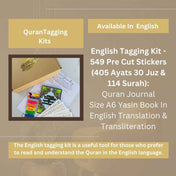
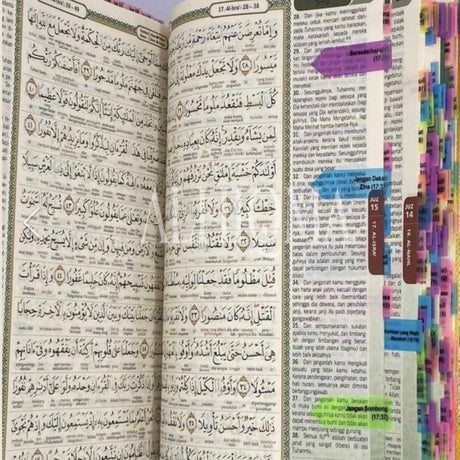
Marking each verse as you go, through a simple system like AlHiqma's Quran tagging kits Al-Quran Tagging Kits & Services, turns this from a vague goal into something you can actually track.
Frequently Asked Questions
Is it valid to recite the Quran without understanding Arabic?
Yes. According to a ruling from Malaysia’s Federal Territories Mufti’s Office (Irsyad Al-Fatwa Siri Ke-676, 2022)1., reciting the Quran in Arabic earns reward even without understanding the meaning, since the Quran was revealed in Arabic and recitation itself is an act of worship. The ruling notes that translations serve a different purpose: helping the reader understand the meaning, not replacing the Arabic recitation itself. Reading transliteration and translation alongside the Arabic text, rather than instead of it, is the approach this guide follows throughout.
Can I just read a Quran translation instead of the Arabic text?
Not quite. The same Malaysian ruling states that reading a translation on its own doesn’t carry the same reward as reciting the Arabic text, and a translation can’t stand in for the Quran during prayer. Translations are best used alongside the Arabic script and transliteration, as a way to understand what you’re reciting, rather than as a substitute for it.
How long does it take to read the Quran without knowing Arabic?
There’s no fixed timeline. Reading a small portion daily, such as one page or a few verses after a prayer, is more sustainable than aiming to finish quickly. Many readers build real familiarity over months, not days.
What if I mispronounce words while reading?
Mispronunciation is a normal part of learning. Pairing your reading with an audio recitation, and starting with short, familiar surahs, helps correct pronunciation naturally over time.
Which Quran edition should a beginner buy first?
Look for one edition that includes Arabic script, transliteration, and translation together on the same page. This lets you build pronunciation and understanding side by side, without needing separate books for each.
Can children learn to read the Quran this way too?
Yes. Starting with short, familiar surahs and simple word-by-word recognition works well for children too, especially when paired with parents reading alongside them.
1.Religious guidance in this article is drawn from Jabatan Mufti Wilayah Persekutuan (Malaysia’s Federal Territories Mufti’s Office), Irsyad Al-Fatwa Siri Ke-676, published 18 March 2022.